
Why Choose Thick Neodymium Disc Magnets for Compact Assemblies?
In many magnetic assemblies, increasing the diameter of a magnet is not always practical. Motors, sensors, positioning devices and compact mechanical components often have fixed installation space, which means engineers need to obtain suitable magnetic performance within a limited footprint.
This is where a Thick Neodymium Disc Magnet becomes useful.
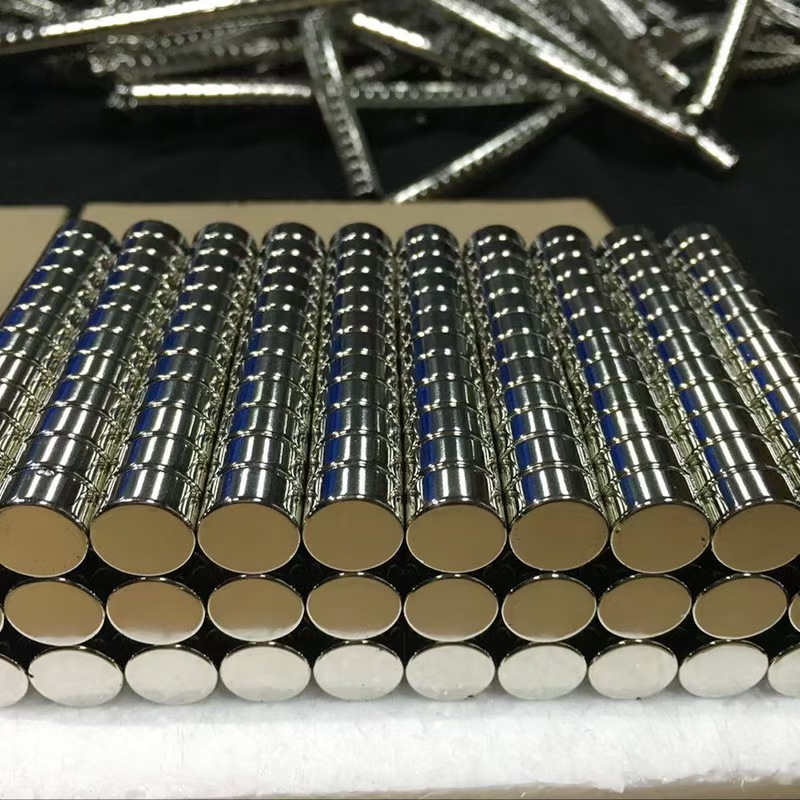
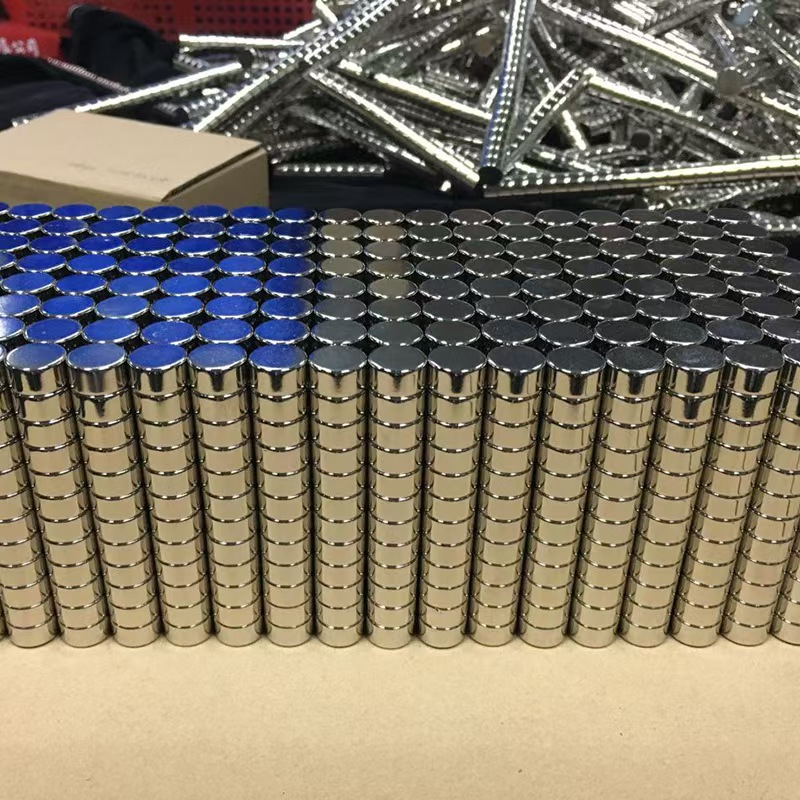
Compared with a conventional thin disc magnet, a thicker round magnet contains more magnetic material without significantly increasing its diameter. Depending on the ratio between diameter and thickness, the same product may also be described as a Neodymium Cylinder Magnet or short cylindrical NdFeB magnet.
More Magnetic Material in a Compact Diameter
A common reason for choosing a thick disc design is space limitation.
For example, dimensions such as 10×5 mm, 15×5 mm, 20×5 mm or 20×10 mm provide different combinations of diameter and magnetic volume. Instead of simply increasing the outside diameter, designers can adjust the thickness to match the available installation depth.
This makes thick round magnets suitable for recessed holes, housings, rotating components and compact magnetic assemblies.
However, a thicker magnet does not automatically mean that it will provide exactly the required force. Actual magnetic performance is also affected by the air gap, mating steel, magnet grade, magnetization direction and the overall magnetic circuit.
N52 Is an Option, Not the Only Solution
For compact applications with higher magnetic requirements, an N52 Thick Neodymium Disc Magnet is often considered because N52 provides a high magnetic energy product.
But N52 is not necessary for every project.
N35, N42, N45, N48 and N50 may offer a better balance between performance, operating temperature and cost for some applications. Higher-temperature M, H or SH grades may also be more appropriate when the magnet operates close to motors, coils or other heat-generating components.
For this reason, magnet grade should be selected together with the magnet dimensions and actual working conditions rather than treated as an independent specification.
Dimensions Matter in OEM Assemblies
For an OEM project, the difference between a standard magnet and a Custom Size Neodymium Magnet is often found in small dimensional details.
Diameter, thickness, edge treatment and tolerance can directly influence:
Assembly clearance
Positioning accuracy
Adhesive thickness
Mechanical interference
Repeatability during mass production
For precision assemblies, the final dimensions should therefore be confirmed according to the drawing rather than relying only on a nominal catalog size.
Typical customization can include diameter, thickness, dimensional tolerance, chamfer, coating and magnetization direction.
Coating Should Match the Working Environment
Most Round NdFeB Magnets used in general industrial environments are supplied with Ni-Cu-Ni coating.
The nickel surface provides a clean metallic finish and basic corrosion protection, but it is not the only option.
Zinc, epoxy and other coatings can be selected depending on humidity, corrosion exposure and assembly conditions. For applications where the magnet may be exposed to moisture or aggressive environments, coating selection should be considered during the early design stage rather than after the magnet dimensions have already been fixed.
Magnetization Is Part of the Design
Axial magnetization is commonly used for a Thick Neodymium Disc Magnet, with the north and south poles located on the two flat circular faces.
This configuration works well for many holding, sensing and assembly applications.
For more specialized designs, magnetization requirements should be confirmed together with the surrounding components. A magnet with the correct dimensions but the wrong pole orientation may not function properly in the final assembly.
Where Are Thick Disc Magnets Used?
Thick disc and short cylinder NdFeB magnets can be found in a wide range of industrial products, including:
Motors and rotor assemblies
Sensors and encoders
Magnetic couplings
Industrial automation
Positioning devices
Magnetic holders
Electronic components
Speakers and acoustic equipment
Precision instruments
Custom magnetic assemblies
In these applications, the magnet is rarely selected by grade alone. The final design normally requires a balance between size, magnetic performance, temperature resistance, coating and assembly structure.
Custom Development for Non-Standard Projects
Many thick disc magnets used in industrial equipment are not standard catalog products.
For a Custom Thick Neodymium Magnet, manufacturers usually need the following information before confirming production:
Diameter × Thickness · Grade · Coating · Magnetization · Tolerance · Working Temperature · Quantity · Application
If the required magnetic grade has not yet been determined, providing information about the actual application can be more useful than simply requesting the highest available grade.
For repeat OEM production, approved drawings or samples also help maintain consistency between initial prototypes and later production batches.
Conclusion
A thick neodymium disc magnet is not simply a stronger version of a thin disc magnet. Its main advantage is the ability to adjust magnetic volume and mechanical proportions within a compact round structure.
For industrial projects, the most suitable solution should be determined by considering magnet size, NdFeB grade, operating temperature, coating, magnetization and assembly conditions together.
For non-standard applications, custom dimensions based on the final assembly are usually more reliable than selecting a magnet only from a standard size list.

Need a custom magnet for your project?
View our Thick Neodymium Disc Magnets or send us your required size, grade, coating, magnetization direction and application for technical evaluation.