
Small Neodymium Disc Magnets for Electronics: What OEM Buyers Should Consider
Small Neodymium Disc Magnets for Electronics: What OEM Buyers Should Consider
As electronic products become smaller, manufacturers face tighter requirements for the components installed inside them. Neodymium magnets are no exception.
A small round magnet may be only a few millimeters in diameter, but its dimensions, coating and magnetic performance can affect how an entire product is assembled.
For electronics manufacturers and OEM buyers, choosing small neodymium disc magnets involves more than selecting the strongest available grade.
Why Small Magnets Require Careful Selection
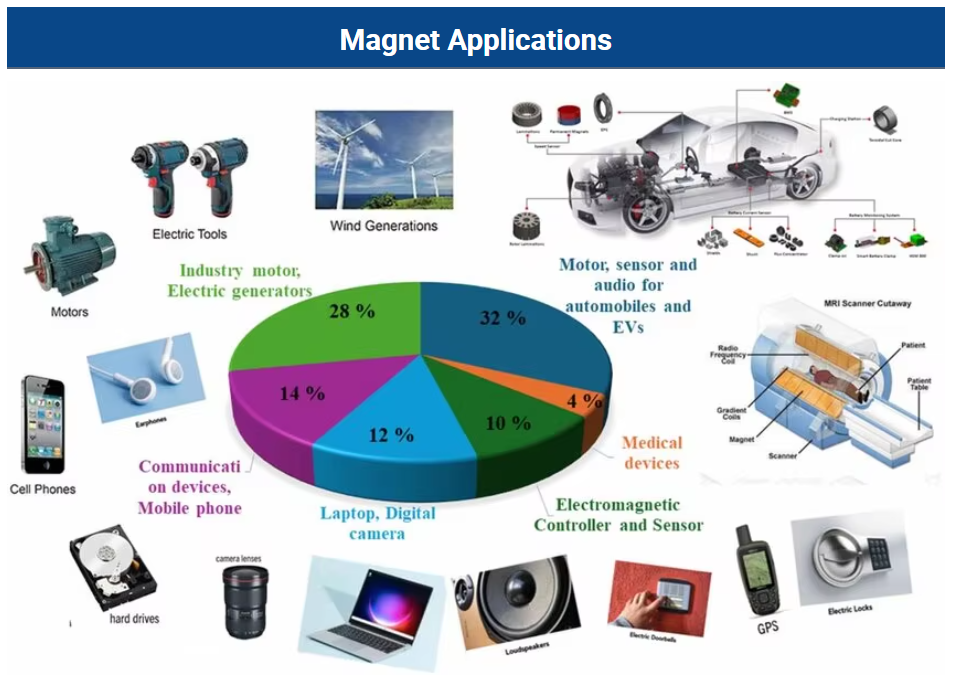
Miniature neodymium magnets are commonly used in electronic housings, sensor systems, compact magnetic closures and small mechanical components.
In many of these applications, the available installation space is fixed during product development.
For example, a magnet that is slightly thicker than the specified dimension may interfere with the surrounding plastic housing. A disc with an unsuitable diameter may also create problems during adhesive bonding or automated assembly.
These issues become more important when production volumes increase.
For manufacturers purchasing thousands of magnets per order, dimensional consistency is often as important as magnetic strength.
Thin Neodymium Disc Magnets: Size Is Only Part of the Specification
Thin NdFeB magnets are useful when products require a low-profile magnetic component.
However, reducing magnet thickness also changes its magnetic behavior.
A thinner magnet may produce a different working magnetic field even when its material grade remains unchanged.
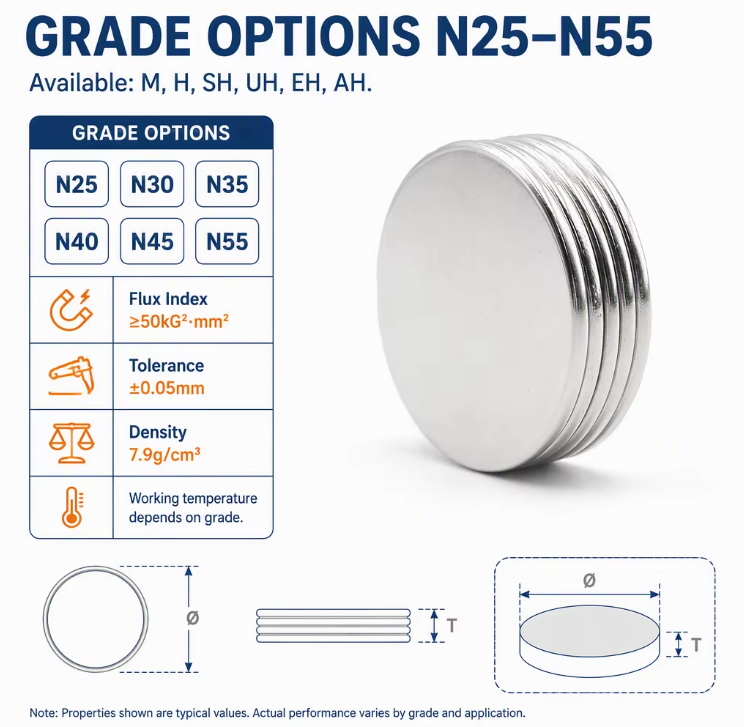
When choosing miniature round magnets, engineers should consider:
Diameter and thickness: Ensure the magnet fits the available installation space.
Magnetic grade: Select N35, N42, N48 or N52 according to the actual magnetic requirements.
Magnetization direction: Confirm how the magnetic field should be oriented in the finished product.
Dimensional tolerance: Define acceptable variation based on the assembly structure.
Working distance: Evaluate the magnetic field at the actual operating gap rather than relying only on surface measurements.
These details should be established before approving the production drawing.
When Is Zinc Coating a Suitable Choice?
Surface coating is another important consideration when specifying small neodymium magnets.
Zinc coated neodymium magnets generally have a silver-grey metallic finish and may be considered for electronic components used in suitable dry indoor environments.
For magnets concealed inside plastic housings or mechanical components, a highly polished decorative surface may not be necessary.
However, coating selection should not be based on appearance alone.
If the finished device will be exposed to moisture, cleaning chemicals or corrosive conditions, the protective coating must be evaluated accordingly.
For precision components, buyers should also confirm whether the specified dimensions refer to the finished coated magnet.
Why Sample Testing Matters Before Bulk Production
A technical drawing can define the nominal dimensions and material requirements, but it cannot fully demonstrate how a magnet will perform inside the final assembly.
Before committing to large-volume production, OEM manufacturers should test samples under realistic installation conditions.
For a magnetic closure, this may involve checking the opening and closing force.
For a sensor application, the required magnetic field should be measured at the intended sensor position.
For a precision plastic housing, mechanical fit and possible damage during installation should be evaluated.
Identifying these issues during sample approval is usually more efficient than correcting them after mass production has started.
What Should OEM Buyers Include in Their Inquiry?
When requesting a quotation for custom small NdFeB magnets, providing complete technical information can shorten the specification review process.
The most useful details include magnet diameter, thickness, material grade, zinc coating requirement, dimensional tolerance, magnetization direction and expected order quantity.
If the magnet is intended for a sensor or another performance-sensitive application, buyers should also provide the required magnetic field and measurement position.
At the manufacturing stage, inspections may cover finished dimensions, surface appearance, magnetization direction and surface magnetic field.
For projects requiring material-grade verification, appropriate magnetic material test records should be reviewed separately from finished-part gauss measurements.
Choosing a Manufacturing Partner for Custom Small Magnets
For electronics and precision-component manufacturers, a reliable magnetic component must meet both mechanical and magnetic requirements.
The key is establishing clear specifications before production, verifying samples in the actual application and maintaining suitable inspection procedures for repeat orders.
We supply custom small zinc coated neodymium disc magnets for OEM applications, including electronic components, compact magnetic closures and selected sensor assemblies.
Different diameters, thicknesses, magnetic grades and dimensional tolerances can be evaluated according to customer drawings and manufacturing feasibility.
Looking for small neodymium magnets for your next OEM project?
Send us your drawings, required specifications and estimated order quantity. Our team can review the manufacturing requirements and discuss sample and bulk supply options.