
Neodymium Magnet Applications
Neodymium Magnet Applications
Neodymium magnets, also known as NdFeB magnets, are the strongest permanent magnets available today. Thanks to their exceptional magnetic strength, compact size, and high efficiency, they are widely used in a variety of industries including electric motors, electronics, automotive systems, renewable energy equipment, and industrial automation.
This page provides an overview of NdFeB magnet manufacturing, performance characteristics, common shapes, magnetization types, and most importantly their applications across different industries.
Neodymium Magnet Manufacturing Process
Sintered NdFeB magnets are produced using a powder metallurgy process that ensures high magnetic performance and stable material properties.
The main production steps include:
Raw material preparation – Rare earth elements such as neodymium, iron, and boron are precisely measured and prepared.
Alloy melting and strip casting – Materials are melted and rapidly cooled to form alloy flakes.
Hydrogen decrepitation and jet milling – The alloy is broken down into extremely fine magnetic powder.
Magnetic field pressing – Powder is pressed in a magnetic field to align magnetic domains.
Sintering and heat treatment – The compacted magnet is sintered at high temperature to achieve dense structure.
Precision machining – Magnets are ground or cut to achieve precise dimensions.
Surface coating – Protective coatings are applied to improve corrosion resistance.
Magnetization – A strong magnetic field permanently magnetizes the material.
This advanced manufacturing process allows NdFeB magnets to achieve extremely high magnetic energy density and consistent quality.
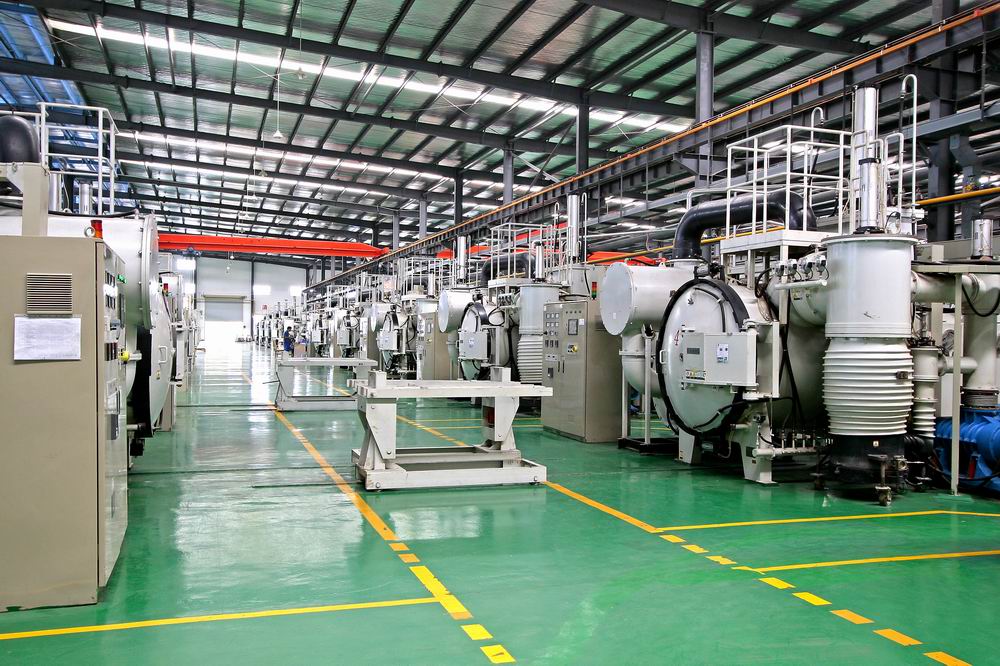
Production workshop

Magnet Forever Factory
Magnetic Properties of NdFeB Magnets
NdFeB magnets offer several important advantages:
Extremely strong magnetic force
High energy density (BHmax)
Compact size with high performance
Excellent magnetic stability
Wide range of magnetic grades
Common grades include:
N35, N38, N40, N42, N45, N48, N50, N52, and N54.
High temperature grades such as H, SH, UH, and EH are available for demanding environments.
These properties make neodymium magnets ideal for applications requiring high efficiency and compact designs.
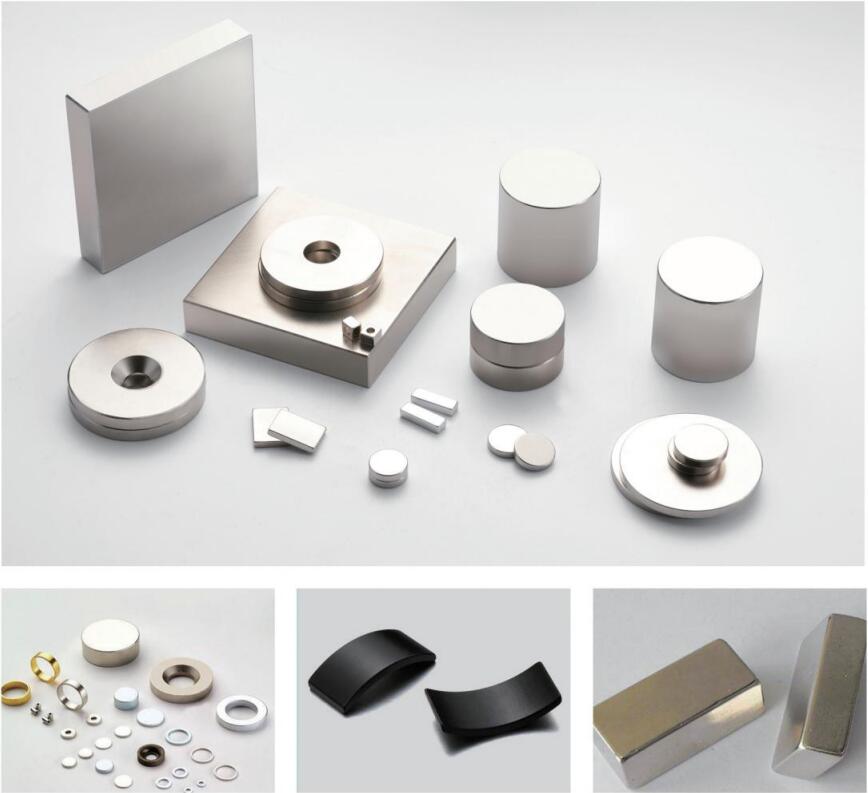
Neodymium Magnet
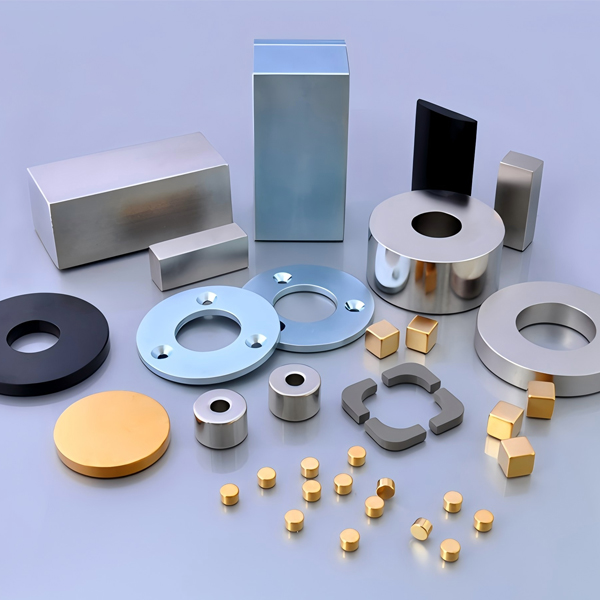
Magnets for Mortor
Surface Coatings of Neodymium Magnets
Because NdFeB magnets contain iron, they require protective coatings to prevent corrosion.
Common surface coatings include:
Nickel (Ni-Cu-Ni)
Zinc (Zn)
Epoxy coating
Gold plating
Phosphate coating
Parylene coating
Different coatings are selected depending on environmental conditions, humidity exposure, and mechanical requirements.
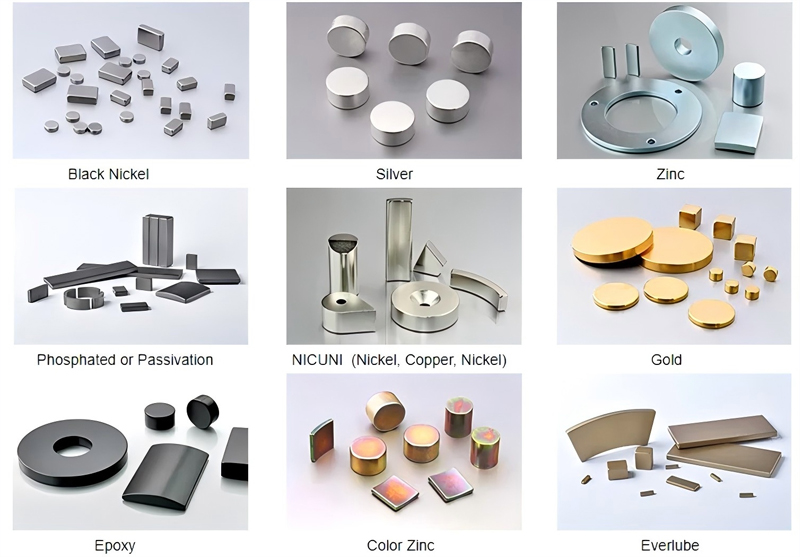
Magnets Caoting
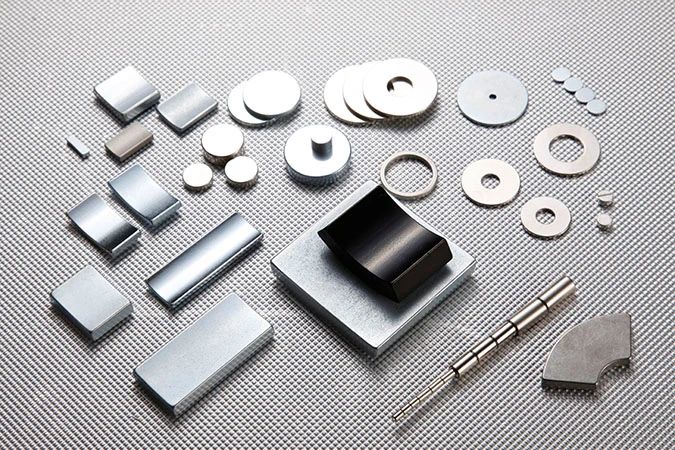
Magnets
Common Magnet Shapes
NdFeB magnets can be manufactured in a wide variety of shapes to meet different design requirements.
Common shapes include:
Disc magnets
Block magnets
Ring magnets
Arc magnets
Cylinder magnets
Countersunk magnets
Custom-shaped magnets
These shapes can be customized according to specific applications and magnetic circuit designs.
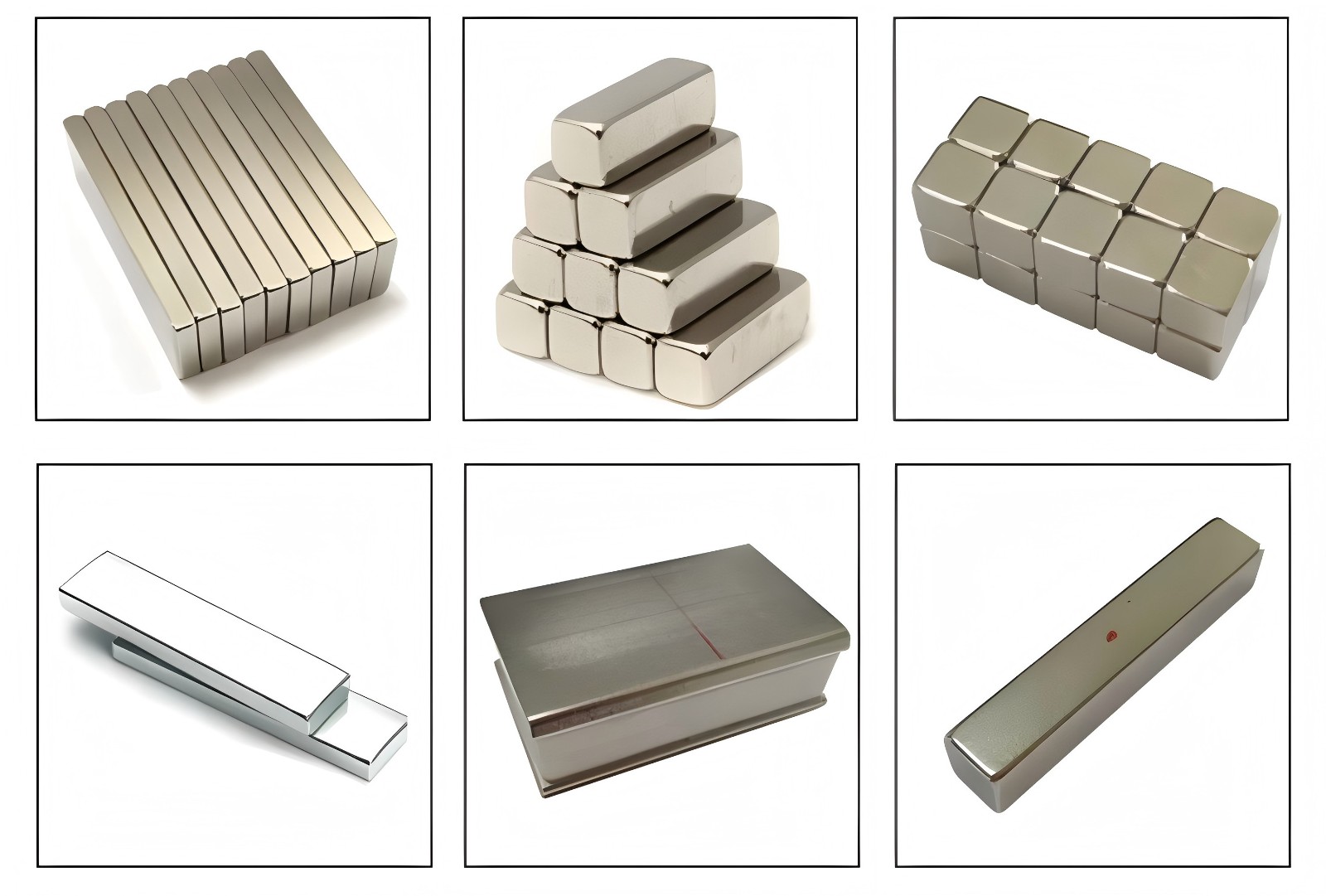
Block Neodymium (NdFeB) Magnet
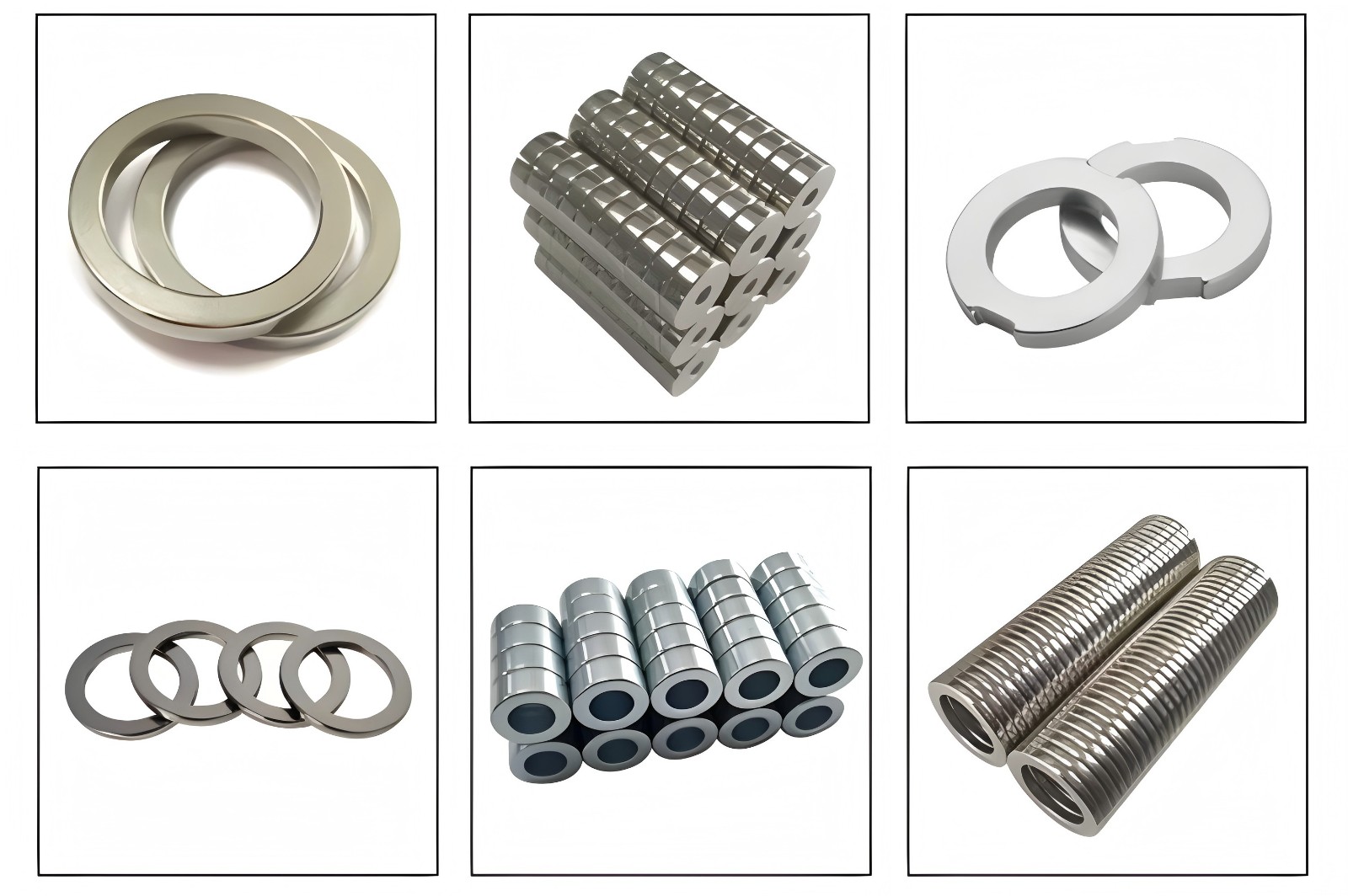
Ring Neodymium (NdFeB) Magnet
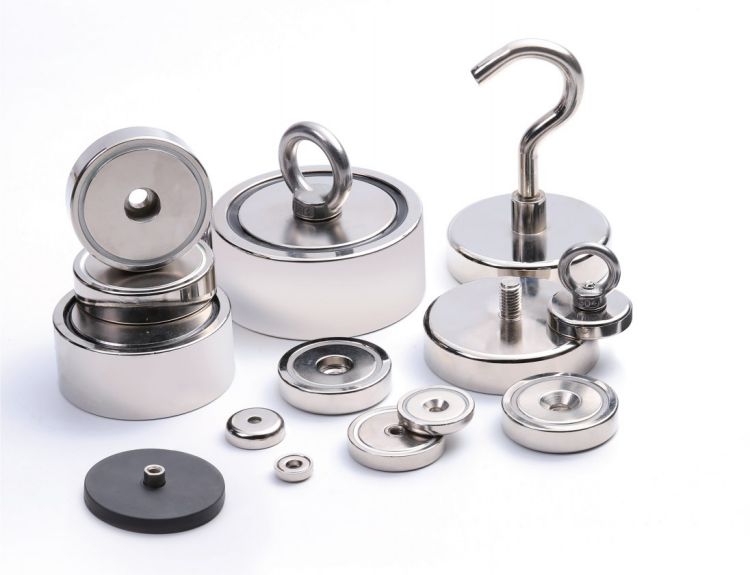
Magnetic Pot
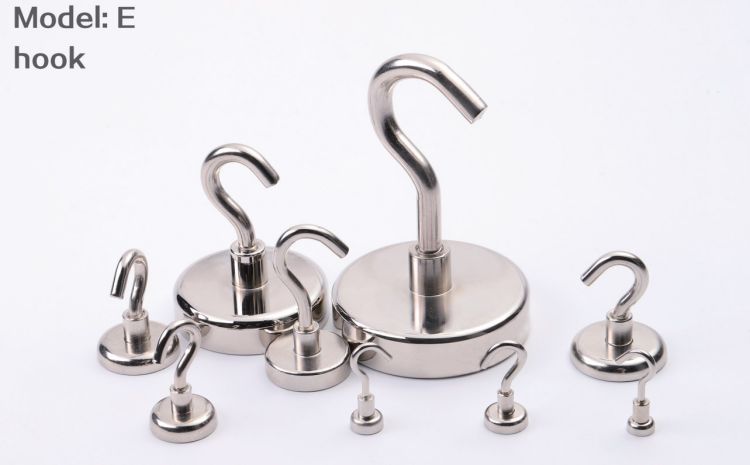
Magnetic Hook
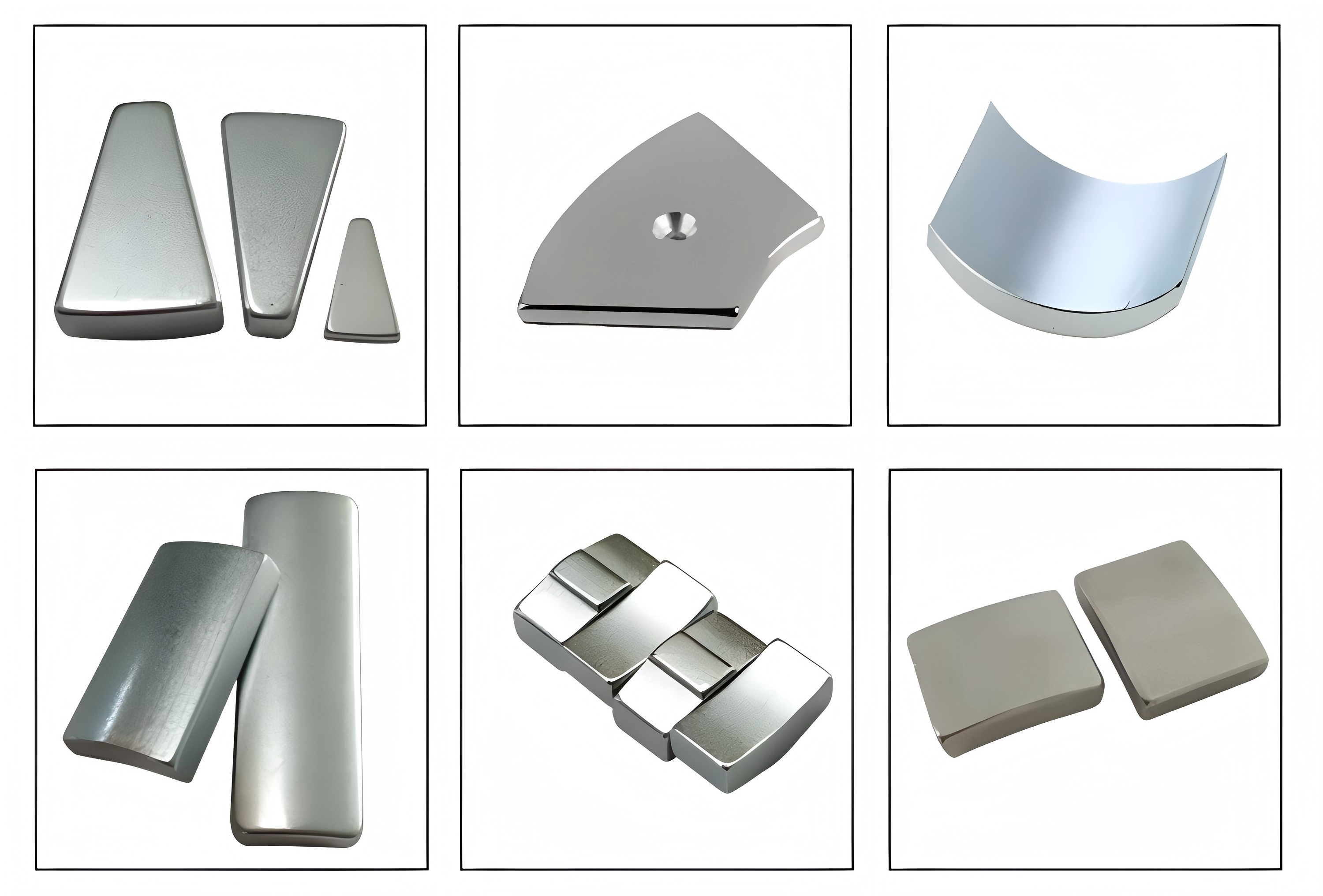
Arc Neodymium (NdFeB) Magnet
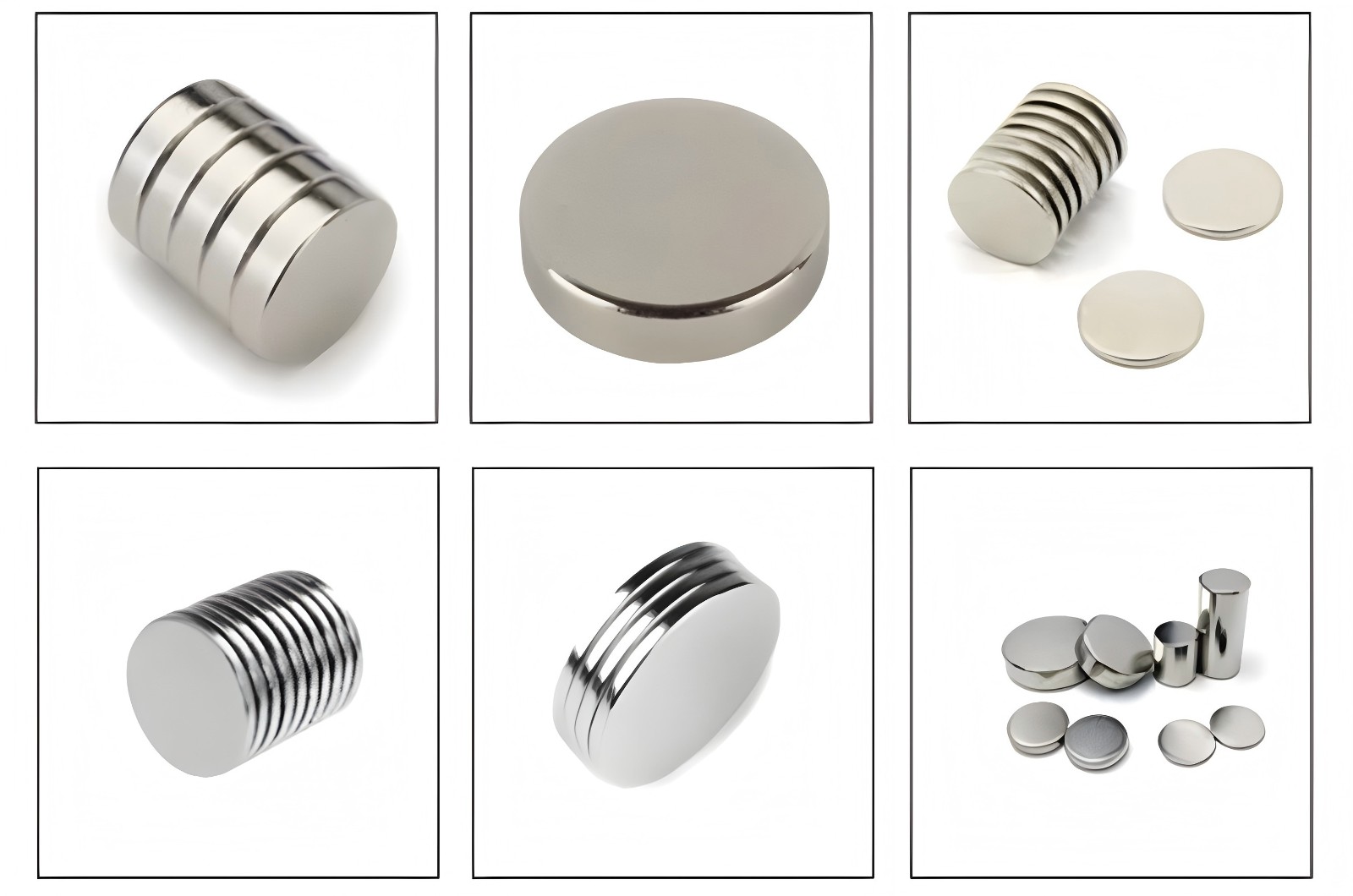
Disc Neodymium (NdFeB) Magnet
Magnetization Types
Neodymium magnets can be magnetized in different directions depending on application needs.
The most common magnetization types include:
Axial Magnetization
The magnetic poles are located on the top and bottom surfaces of the magnet. This type is commonly used in disc or cylinder magnets.
Diametric Magnetization
The poles are located on opposite sides across the diameter of the magnet, often used in cylindrical magnets for rotational applications.
Radial Magnetization
The magnetic field radiates outward from the center of a ring or arc magnet. This type is widely used in electric motors.
Multi-Pole Magnetization
Multiple alternating north and south poles are created on a single surface. This is common in magnetic encoders and sensors.
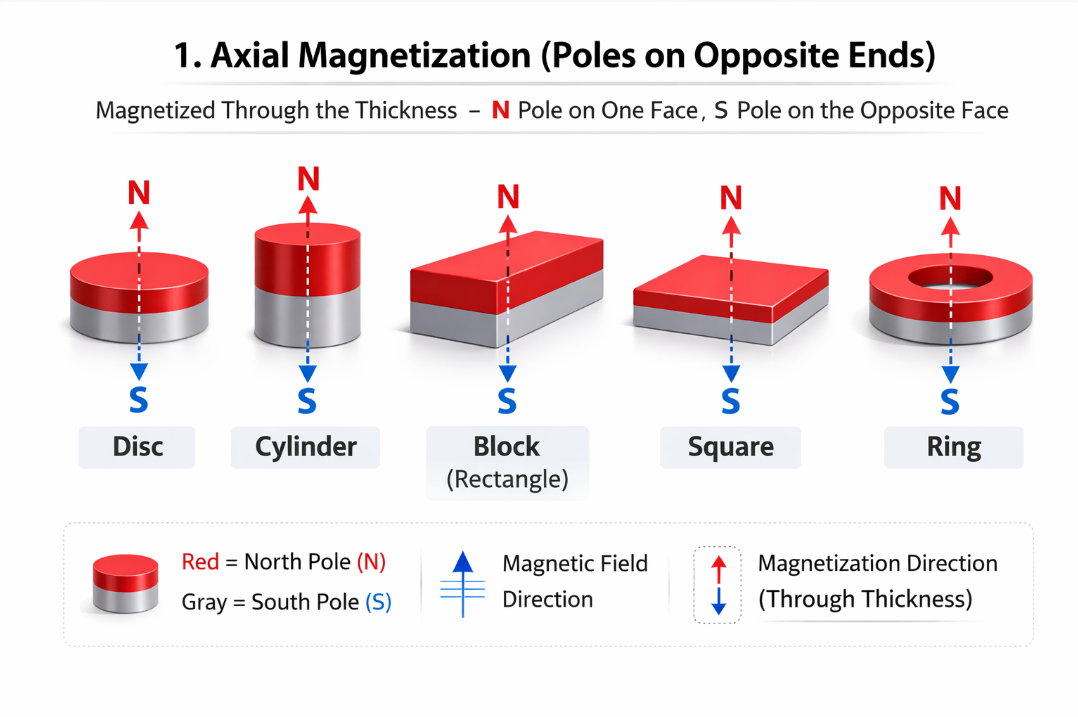
Magnetization for Neodymium Magnet
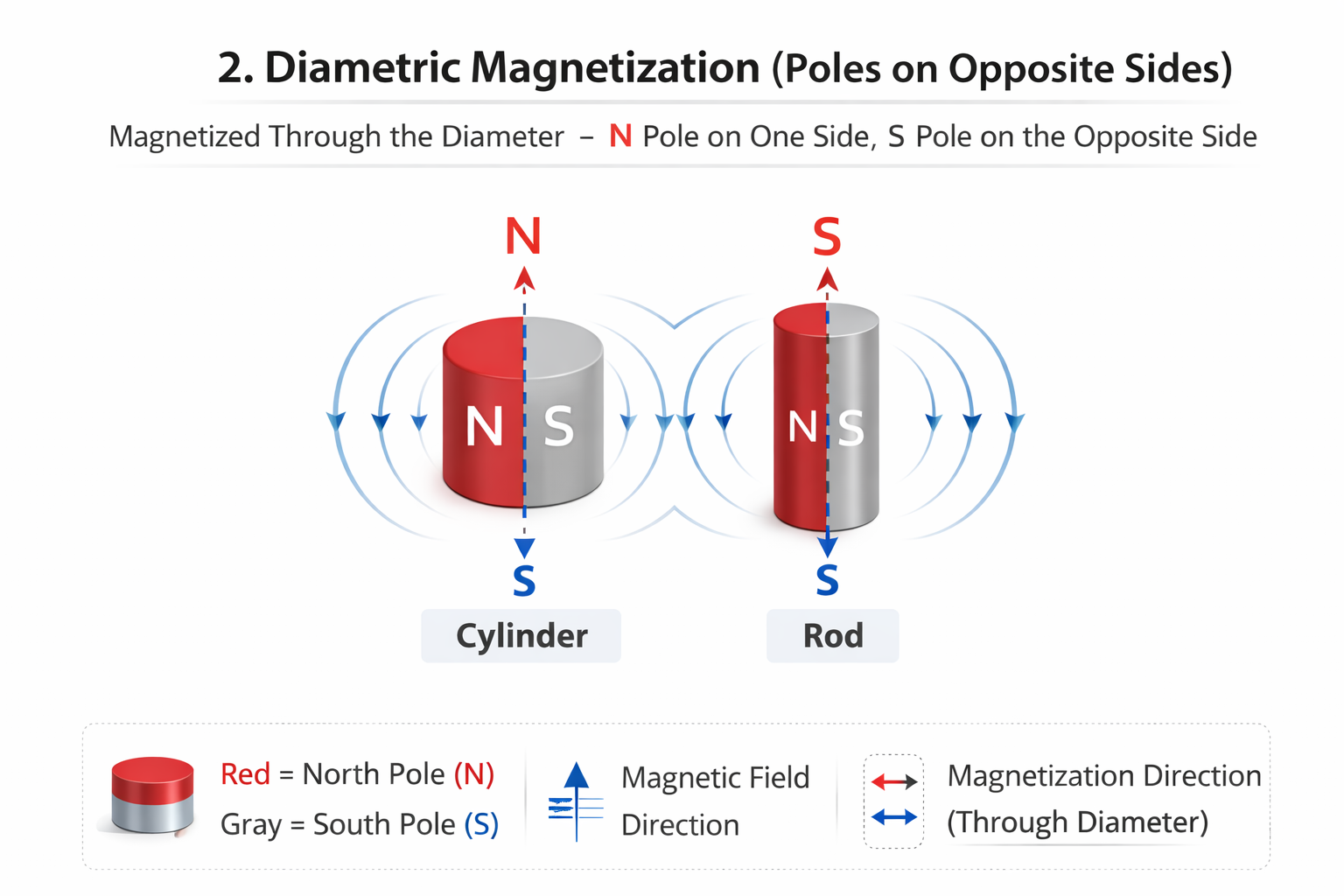
Magnetization for Magnet
Applications of Neodymium Magnets
Due to their exceptional magnetic performance, NdFeB magnets play a critical role in many modern technologies.
Below are some of the most important application areas.
Electric Motors
Electric motors are one of the largest application fields for neodymium magnets.
NdFeB magnets are used in:
Brushless DC motors
Servo motors
Stepper motors
Electric vehicle motors
Industrial automation motors
Because of their high magnetic energy density, these magnets enable motors to achieve:
higher efficiency
higher torque output
smaller size and lighter weight
In electric vehicles and industrial automation systems, neodymium magnets are essential for improving energy efficiency and performance.
Consumer Electronics
Many modern electronic devices rely on neodymium magnets.
Common examples include:
smartphones
headphones and speakers
hard disk drives
microphones
cameras
In audio devices, NdFeB magnets provide strong magnetic fields that allow compact speaker designs with powerful sound output.
Their small size and strong performance make them ideal for miniaturized electronic products.
Automotive Industry
The automotive industry increasingly relies on neodymium magnets for advanced technologies.
Applications include:
electric power steering motors
ABS sensors
electric vehicle drive motors
fuel pumps
electric window motors
braking systems
As electric vehicles continue to grow rapidly, the demand for high-performance magnets is expected to increase significantly.
Neodymium magnets are key components for high-efficiency EV motors and hybrid power systems.
Renewable Energy
NdFeB magnets are also widely used in renewable energy equipment.
One of the most important applications is wind power generation.
In modern wind turbines, permanent magnet generators use neodymium magnets to achieve:
higher energy conversion efficiency
reduced maintenance requirements
improved reliability
This technology plays an important role in the global transition toward clean and sustainable energy.
Industrial Automation
Industrial automation systems require reliable and precise magnetic components.
NdFeB magnets are used in:
robotic actuators
magnetic grippers
automation sensors
magnetic couplings
conveyor systems
Their high magnetic strength allows equipment to operate with greater precision and stability, improving overall production efficiency.
Medical Equipment
Medical devices also rely on neodymium magnets for various functions.
Typical applications include:
MRI equipment components
medical pumps
surgical instruments
dental devices
laboratory equipment
These magnets provide reliable performance in precision medical technologies.
Electro-Acoustic Devices
The electro-acoustic industry is another major application area.
Neodymium magnets are widely used in:
speakers
headphones
microphones
professional audio systems
Their strong magnetic fields allow audio devices to produce high sound quality while maintaining compact designs.
Future Application Prospects
As modern technology continues to advance, the demand for high-performance magnets will continue to grow.
Emerging industries that require neodymium magnets include:
electric vehicles
renewable energy systems
robotics
smart manufacturing
aerospace technologies
With their exceptional magnetic properties, NdFeB magnets will remain a key material for next-generation technologies.
Custom Magnet Solutions
Magnet Forever specializes in the development and manufacturing of high-quality neodymium magnets for global customers.
We provide:
custom magnet design
OEM manufacturing
strict quality control
reliable global supply
If you need professional support for magnet applications, our engineering team will be happy to assist you.
Contact Us
Looking for high-performance magnets for your application?
Contact us today to discuss your project and receive customized magnet solutions.
Request a Quote
Send Your Drawing